



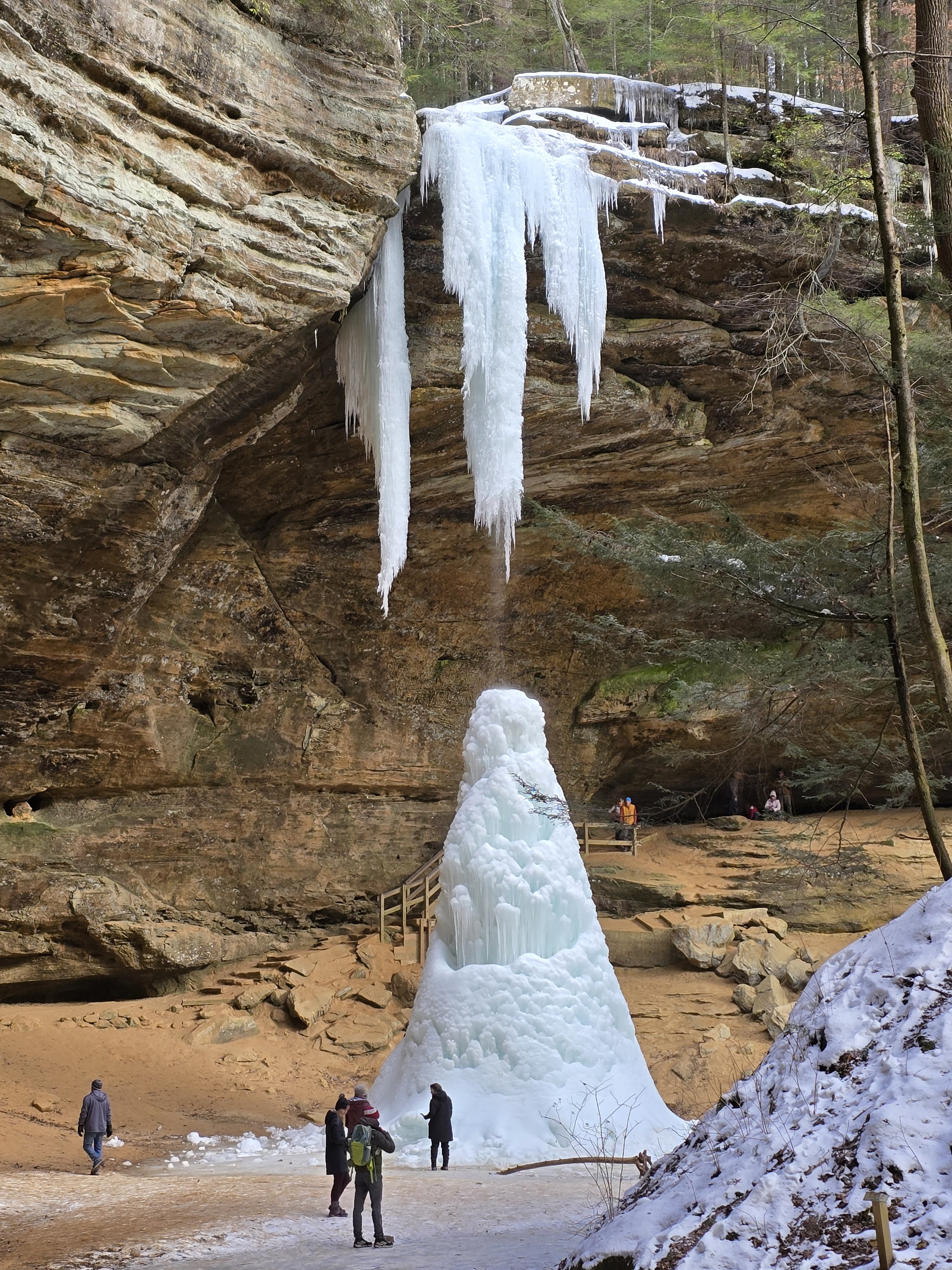
Hiking during the winter can be a magical experience, allowing you to see different perspectives than you might during other seasons. From frozen ice sculptures to silent, peaceful forests and animal tracks in fresh snow. It is worth it to brave the cold, however, winter hiking presents a unique set of challenges, and each needs to be addressed, often before you even set foot on the trail, or you could find yourself in a dangerous situation. Here is the gear I wear and how I prepare for a winter hike.

Know the Dangers and Prepare Yourself
Hypothermia occurs when you feel colder than you actually are, often after sweating. As sweat evaporates, it pulls moisture away from your skin, which cools your body. This condition can arise when you sweat and overheat and presents health risks. It’s important to note that hypothermia is not only uncomfortable but can also be life-threatening if not properly managed.
Let me tell you about the worst experience I had with near hypothermia. I was wearing cotton, setting up a tent in a bad location, and it was 40 degrees on a rainy winter night.

The second time I experienced hypothermia was hiking in Spring Valley with too many layers on. I was sweating and got overheated.
Some of the items I mention below are for cooler temperatures, while others are for freezing temperatures. I break down the areas of concern and recommend some of my favorite pieces of gear for each area of the body. I often think about it this way as I’m preparing for a hike while carefully considering the weather forecast.
Dress in Layers

You should dress in multiple layers so they can be removed and packed according to the temperature, weather, and level of exertion. The three primary layers are base, mid, and outer.
Base layers are closest to your skin. They are also known as long johns, made from materials like wool, fleece, or nylon/polyester. The primary goal of the base layer is to wick away moisture, stay warm, and remain breathable. The base layers are typically wool for me, but there are fleece or even dry-fit materials like nylon or polyester that can also work. Sometimes, I may even wear two of these if it’s really cold. Note that cotton is the enemy here as it holds moisture, gets heavy, dries slowly, and doesn’t retain heat when wet. If you are trying to become hypothermic, then by all means, you are almost guaranteed.

Mid layers are best when it gets a little colder and you need a second layer before the outer layers. You also want these materials to be wicking and breathable. Typically, this is fleece for me.
Outer Layers are just as you would imagine, the outer layer. They can be removed during warmer hikes and should be packable and breatheable. Think rain jackts, puffy down jackets, windbreakers, and even parkas.

The outer layer is your last protection against harsh elements. This layer can be further broken down into soft vs. hard shells. There is a difference between water resistant and waterproof.
To help me prepare for a hike, I will consider the weather currently and the forecasted outlook, like sub-freezing or just cool, rainy or dry, and windy or calm. I will share layers to consider for fives areas of the body. Those areas are as follows:
- Feet
- Legs
- Torso
- Head
- Hands
When heading out for a winter hike…

Make sure you know what the weather is forecasted to be, and always consider packing an extra layer if it’s questionable. I always get the best I can afford because I have found in my experience, that price, usually means better quality and cheaper gear simply doesn’t outlast the good stuff. It may end up costing you more, or increasing risk of danger if the cheap gear fails on the trail.
[NOTE: I do have affiliations with most of these brands and if you buy from them, I get a small percentage at no additional cost to you. The products recommended below are what I believe in and use regularly. I am not getting paid to recommend any products I don’t use or being told what to say. My goal is to help you be successful.]
Feet
- Base layer
- Smartwool Socks are my absolute favorite. I’ve had and regularly use these socks everyday and have had some pairs for many years. They last that long. Plus they wick away moisture, breathe well, retain warmth when wet, and as a bonus, the wool is naturally odor resistant. I wear the Smartwool Performance Hike Light Cushion Ankle Socks almost everyday, but when it gets colder I wear the Smartwool Larimer Socks.
- Mid layer
- Not applicable on this area
- Outer layer
- I need ankle support when I hike, and winter can be slippery. Snow can hide holes or even roots that you can trip over. I also highly recommend waterproof boots, as getting water from melting snow or a shallow creek can really be painful if your feet freeze. My favorites right now are the Asolo Finder GV Hiking Boots.
- Outdoor Research Thru Gaiters are optional when the snow gets deeper, as they can prevent snow from going down into your boots or up your leg under your pants. I prefer the REI Co-op Flash Gaiters are smaller and help keep snow and rocks from entering the top of the boot.
- Kahtoola MICROspikes are amazing and I always carry them in my pack in the winter. I have come upon frozen trails covered with ice a few times and these spikes have saved me many falls and frustrations. It’s no fun to slide down a hill you are trying to climb, not to mention the danger of injuries.
Legs
- Base layer
- Intraknit Thermal Max Merino Base Layer Bottoms are my go-to “long johns.” Like the socks, they wick away moisture, breathe, and retain warmth when wet.
- Mid layer
- My favorite pants are the KUHL Klash Pants. The pockets are zippered in the right spots, the pants stretch where they need to stretch, and the material is durable, water-resistant, and scratch-proof.
- I also have a pair of Fjallraven Vidda Pro Pants that are a little heavier material, constructed to last forever.
- Outer layer
- REI Co-op Rainier Rain Pants are always in my pack, just in case it starts sleeting or I need an extra dry layer.
- I love wearing bibs for easy outfitting, durability, and flexibility. I am testing out a couple different brands, so look for some recommendations soon on these. For now, I can link you into the REI bibs category and you can look for something you may like.
Torso
- Base layer
- Smartwool Intraknit Thermal Merino Crew Base Layer Top is my preferred undershirt when it’s below freezing. Like the socks and bottoms, they wick away moisture, breathe, and retain warmth when wet.
- Mid layer
- Microgrid Fleece is all the rage right now, and the Patagonia R1 Pullover Hoodie is awesome. It breathes well yet is warm enough to be worn alone when it’s below 55 or above freezing.
- The Black Diamond Coefficient Storm Hoodie is also pretty sweet. It has a water-resistant coating that repels a small amount of moisture.
- I also have a couple sweaters that I like to wear. The KUHL Interceptr Full-Zip Jacket and the Patagonia Retro Pile Fleece Jacket are my favorites when I need another mid layer.
- Outer layer
- The KUHL Spyfire Down Jacket is my go-to for when it starts to get cold. It’s a little light for sub 20 F weather and is not waterproof at all, but it looks sweet and works well for slightly colder temperatures.
- REI Co-op Rainier Rain Jacket is my rain jacket of choice. It packs down real small and as long as you reapply the Nikwax TX.Direct Spray-On Waterproofer for Clothing every year or so, it is impenetrable.
- My Patagonia Downdrift Jacket is heavy down, wind-proof, and water-proof. I have never felt cold with it on.
Head
- Base layer
- Buff Polar Multifunctional Neckwear helps keep the neck warm and can double as a face cover to keep some wind off the nose and cheeks.
- I also like the Smartwool Merino Neck Gaiter.
- Mid layer
- The KUHL Renegade Hat is a sweet hiking hat for both summer and cooler above freezing temps. It is breathable and dries real fast.
- When it gets colder, I use a Smartwool Thermal Merino Reversible Cuffed Beanie.
- Outer layer
- I have an Arc’teryx Rho AR Balaclava that i use in place of the buff when it gets really cold.
- The hood on a REI Co-op Rainier Rain Jacket or Patagonia Downdrift Jacket can help add additional wind and moisture resistance when it’s colder.
Hands
- Base layer
- Smartwool Liner Gloves are my go-to gloves when it starts to get around freezing.
- Mid layer
- Not really applicable for hands.
- Outer layer
- When it gets really cold these REI Co-op Switchback GTX Gloves 2.0 are both windproof and waterproof.
Other Considerations:
I sometimes carry some additional miscellaneous items, depending on the length and location of the hike and weather conditions, like hand warmers, extra dry socks, a wool blanket, a tent for emergency shelter, and fire-starting materials.
Also, don’t forget the usual items, like a backpack, trekking poles, sunglasses, water, and energy sources like snacks and electrolytes. I also never go anywhere without my Garmin GPSMap handheld, so I don’t get lost.
REI can supply most of these things.
Closing Thoughts
- Plan ahead, considering protective gear for each area of the body.
- Consider the weather forecast as it determines how much gear you bring.
- Consider creating a packing list to guide as you pack.
- Dress and pack in layers and consider things you might need if the weather is worse than expected.
- Pace yourself and take a break when needed to avoid sweating.
- Use these tips and consider my affiliate links above to buy some of my favorite gear. It helps support my site.


Leave a Reply